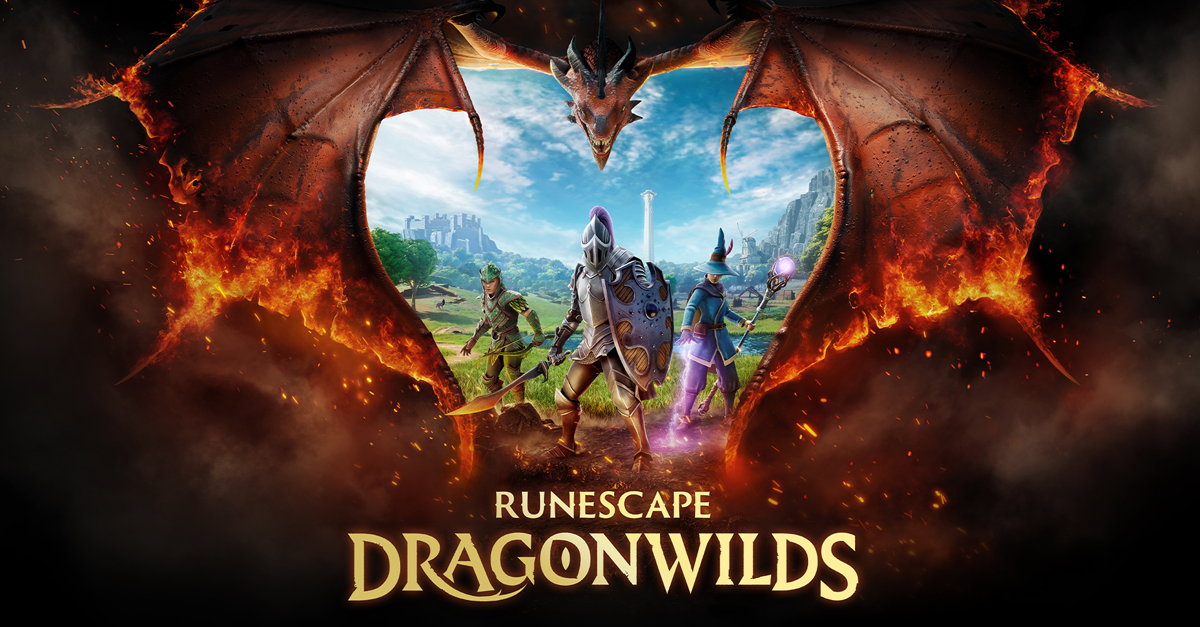
RuneScape: Dragonwilds is now a 1.0 release. Jagex ended the game’s Early Access run on September 15 and brought it to console as well as PC. The full Dragonwilds 1.0 update notes from Jagex are worth a look: they spell out a launch that is bigger than a version-number change.
Cross-play, invite codes, a new end-game boss named Kuldra, new Rune and Dragon equipment, a new wand weapon type, and a large set of building and combat changes all arrive with 1.0. Jagex also says it fixed 2,665 issues while preparing the launch. That does not make every rough edge vanish, but it shows the team understood what this moment required.
What Early Access players were enjoying
Early community discussion has been most enthusiastic about the way Dragonwilds translates familiar RuneScape habits into a survival loop. Levelling skills, gathering materials, preparing gear and pushing into harder territory are all recognisably RuneScape ideas. Here, though, they feed a more immediate routine of building a base, keeping a party supplied and surviving Ashenfall’s threats.
That combination gives the game a useful hook for two audiences. RuneScape players get a new setting, skills and references that feel connected to the wider world. Survival players get a co-op adventure with hand-built progression, bosses and a clear reason to keep moving forward. In recent Steam reviews, players regularly point to that familiar progression and the co-op survival loop as the reason the game has stayed on their radar after Early Access.

How Dragonwilds differs from RuneScape
The name can create the wrong expectation. Dragonwilds is not a new version of the long-running RuneScape MMO, and it is not a replacement for it. RuneScape is built around a shared online world and a sprawling long-term journey. Dragonwilds is a co-op survival adventure in the same universe: it can be played alone or with friends, and its moment-to-moment focus is gathering, crafting, building and taking on bosses.
The difference is why 1.0 matters. Dragonwilds does not need to recreate every part of RuneScape to work. It needs to make its own survival systems satisfying while preserving the things RuneScape fans care about: steady skill growth, useful upgrades, a sense of discovery and challenges worth preparing for.
The 1.0 reception is positive, with a practical question attached
Player reception in the days after 1.0 is broadly encouraging, particularly around the size of the update and the chance to play across platforms. There are still recurring reservations in player feedback, especially from people who want more depth, smoother performance, or a stronger solo experience. That is normal territory for a survival game making the jump from Early Access, but it is also the part Jagex cannot ignore.
The encouraging sign is that the studio is already describing 1.0 as the start of a multi-year plan. Its next content update, Luminance, is planned for winter and will add another building kit alongside further work on combat. For players deciding whether now is the time to start, the important question is not simply whether 1.0 has more content. It is whether the new systems make the road ahead feel worth investing in.
Why this is worth watching
Dragonwilds has moved from a promising experiment to a game that must prove it can hold attention. The launch content gives it better tools to do that: cross-play makes it easier to bring a group together, the new boss and gear give established players another reason to prepare, and the performance work matters for anyone returning to a large build.
For RuneScape fans, it may be the most interesting kind of spin-off: one that borrows the rhythm of the original without pretending to be the original. For survival-game players, it is a chance to see whether Jagex’s sense of progression can make Ashenfall stand apart from an increasingly crowded genre. The reception after 1.0 suggests there is interest. The next updates will decide whether that interest sticks.